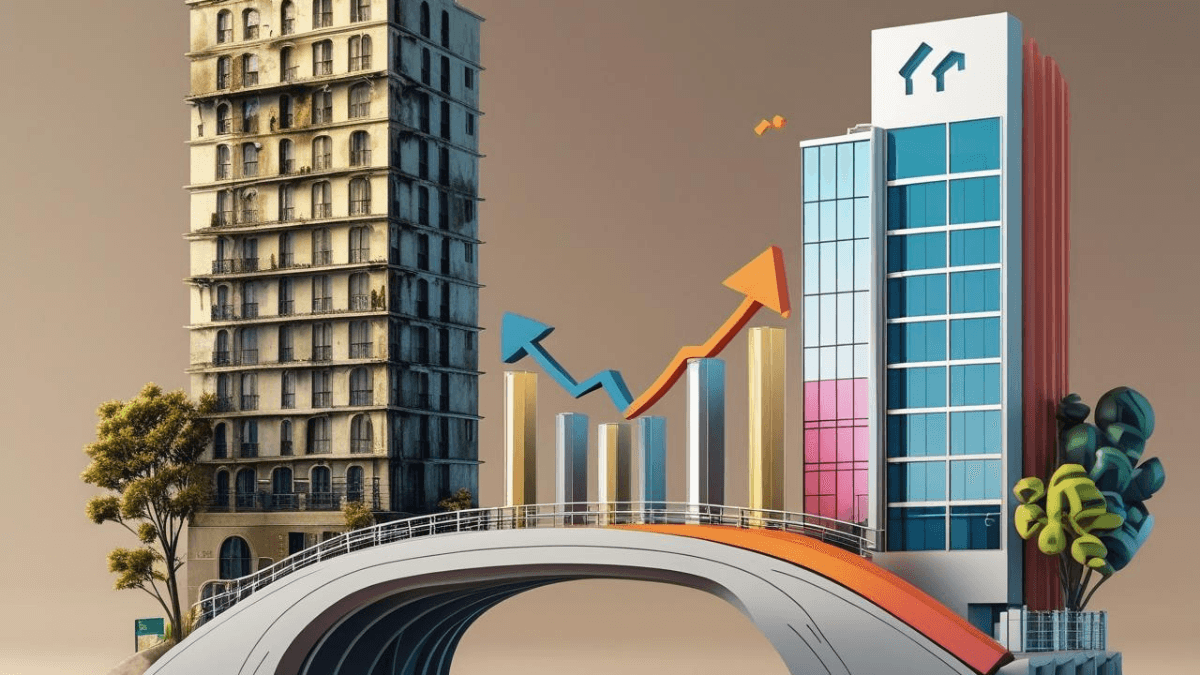
The American hospitality landscape in 2026 is undergoing a “Great Reset.” While the total global hospitality market has expanded to $5.83 trillion, this growth masks a deepening divide in property performance. A “K-shaped” recovery means that while high-end boutique and luxury assets thrive, mid-scale and limited-service properties are struggling with stagnant RevPAR (Revenue Per Available Room) and rising labor costs.
For the strategic investor, this is the “vintage year” experts predicted. The primary catalyst for this opportunity is the “Maturity Wall.” Between 2025 and 2026, an estimated $1.3 trillion in U.S. commercial real estate debt is set to come due. Much of this debt originated when interest rates were at historic lows. Now, owners face a refinancing environment where interest costs have effectively doubled.
When a property’s cash flow cannot support a new permanent loan, it enters a state of “distress.” If you can move faster than the traditional banks, you can acquire these assets at 30% below replacement value. A bridge loan for distressed hotel acquisition is the master key that allows you to close quickly, renovate, and stabilize the property for long-term profit.
Is the $1.3 Trillion Maturity Wall Creating a Once-in-a-Generation Buying Window?
The sheer volume of maturing debt is creating a supply of “debt-trapped” hotels. According to the Mortgage Bankers Association, 30% of hotel mortgage balances are scheduled to mature in 2026 the highest share of any property type. Many of these owners are facing “equity gaps” where the new loan amount is significantly lower than the expiring debt.
The result is a surge in “potentially troubled” assets. Data from early 2026 shows that roughly 40-45% of full-service hotel loans are currently on watchlists or have already been transferred to special servicers. CMBS lodging delinquency rates climbed to 7.03% by April, the highest levels since the pandemic recovery.
This environment favors “entrepreneurial sponsors” who are closer to the asset and can make faster decisions than institutional giants. By utilizing a bridge loan for distressed hotel acquisition, you can step into these deals. At the same time, traditional lenders are paralyzed by their own internal credit committees.
What is a bridge loan for a distressed hotel acquisition?
At its simplest, a bridge loan is a short-term, asset-based financing solution. It “bridges the gap” between the purchase of a troubled property and its eventual stabilization or permanent refinancing. Unlike a 30-year mortgage, a bridge loan is designed for speed and flexibility.
Advantages of bridge loans for acquiring distressed hotels
Standard bank loans are often a poor fit for distressed assets because they focus on historical performance. If a hotel has been mismanaged or under-maintained, its history looks terrible on paper. A bridge lender, such as HotelLoans.Net, looks ahead.
The primary advantages of bridge loans for acquiring distressed hotels include:
Speed of Execution: You can often close in 7 to 14 days, allowing you to beat all-cash institutional buyers.
Asset-Based Underwriting: Lenders focus on the “As-Stabilized” value rather than the current poor cash flow.
Interest-Only Payments: This structure preserves your cash flow during the critical renovation phase.
Renovation Funding: Many bridge loans fund 100% of the rehab costs as part of the total loan package.
Is the CMBS Delinquency Spike a Warning Sign or an Opportunity?
The rise in delinquencies is particularly concentrated in “gateway” and convention-heavy markets. Floating-rate structures originated in 2021, and 2022 are hitting interest rate caps that are now expiring, causing debt service costs to explode for current owners.
For a savvy investor, these “broken” capital stacks are an opportunity. When a property is transferred to a special servicer, the window to act is narrow. An urgent bridge loan for hotel bankruptcy acquisition allows you to provide a “Letter of Intent” (LOI) within 24 hours, proving to the court or the servicer that you have the capital to perform immediately.
How to Get a Bridge Loan for a Distressed Hotel
Securing quick bridge financing for a troubled hotel purchase requires a different preparation strategy than a traditional loan. You are selling the property’s “turnaround story”.
Bridge loan requirements for hotel acquisition in 2026
To qualify, lenders typically look for the following metrics:
Loan-to-Cost (LTC): This is the total loan amount divided by the purchase price plus renovations. Top lenders in 2026 offer LTC of 85%-90%.
After-Repair Value (ARV): Lenders generally cap their exposure at 65%-75% of the estimated value once the property is stabilized.
Debt Service Coverage Ratio (DSCR): While the current DSCR might be below 1.0 (losing money), you must show a projected DSCR of at least 1.25 after renovations are complete.
Experience: Lenders prefer “sponsors” with at least 5 years of industry experience or a proven track record in “fix and flip” or “fix and hold” hospitality projects.
Applying for a bridge loan for a distressed hotel: The Checklist
To ensure a 4-6 week closing, you must have your “starter package” ready before you even find the deal:
Executive Summary: A one-page overview of your vision for the property.
Trailing 12-Month (T12) Statements: Even if the numbers are bad, transparency builds trust.
Detailed Scope of Work: A line-item budget for the renovations or “Process Improvement Plan” (PIP).
Organizational Chart: Details of the LLC or partnership that will hold the title.
Distressed Hotel Financing Options Bridge Loan: A 2026 Comparison
Choosing the right tool for the job is critical. Depending on the level of distress and your timeline, you may choose from several distressed hotel financing options that bridge loan experts recommend.
Loan Type
Best For
Closing Speed (Weeks)
Interest Rate (2026)
Traditional Bridge
Value-add renovations
10-14
9% – 12%
Hard Money
Urgent bankruptcy auctions
3-7
11% – 15%
DSCR Loan
Stabilized long-term holding
21-30
7% – 9%
SBA 504
Owner-operators (rural/small)
45-60
6% – 8%
Can Private Bridge Loans for Distressed Hotel Investors Outperform Traditional Banks in 2026?
Traditional banks have significantly tightened their credit standards. According to Federal Reserve data, banks are now more selective with both existing and new borrowers, often requiring equity of 35%-40% for hospitality projects.
In contrast, private bridge loans for distressed hotel investors through platforms like HotelLoans.Net leverage a network of 200 private lenders and investors. These lenders are not restricted by the same regulatory “stress tests” that hamper national banks. This means we can offer higher leverage (up to 90% LTC) and ignore personal FICO scores if the property’s ARV is strong enough to protect the capital.
As a “correspondent and table lender,” HotelLoans.Net has the unique capability to fund deals at the closing table using our own lines of credit. This eliminates the “broker delay” and ensures that when we issue an LOI, the funds are actually available.
Are You Ready for the Distressed Hotel Acquisition Financing Challenges Bridge Loan Experts Predict?
The biggest hurdle in 2026 is the “Exit Strategy.” A bridge loan is not permanent debt. You must have a clear path to refining a distressed hotel with bridge loan proceeds into a 30-year permanent loan.
Understanding bridge loan terms, distressed hotel investors must watch
Before signing, review these three critical terms:
Origination Points: Expect to pay 2-4 points ($2,000 – $4,000 for every $100,000 borrowed) at closing.
Prepayment Penalties: Look for “open” bridge loans. Since you want to refinance as soon as the property is stabilized, you don’t want to be locked into high rates for 36 months.
Interest Reserves: Many lenders will “roll” the first 6-12 months of interest into the loan amount. This means you don’t have to make monthly out-of-pocket payments while the hotel is undergoing renovations.
Case studies bridge loan distressed hotel acquisition
Success in this sector is best understood through real-world application.
Case Study 1: The New York City Bankruptcy Sale
In late 2025, a prime Manhattan hotel property was sold out of bankruptcy. The asset was burdened by a troubled CMBS loan. A private bridge lender provided $40 million to facilitate the redevelopment. This allowed the investor to take control, perform high-end renovations, and stabilize the property within 24 months, ultimately refinancing into a permanent life insurance company loan.
Case Study 2: The Indiana Adaptive Reuse
A C-class property in Merrillville, Indiana, had seen its occupancy drop to 55% due to mismanagement. A buyer secured a $23 million bridge loan to perform “gut renovations,” including new appliances and stone countertops. By addressing the deferred maintenance immediately, the owner pushed occupancy back to the 95% market average and successfully transitioned into a low-cost FHA 223(f) loan.
Is a DSCR Refinance the Ultimate Exit Strategy for Your Distressed Asset?
Once your property is “rent-ready” or stabilized, the goal is to secure long-term cash flow. Refinancing distressed hotel with bridge loan into a DSCR (Debt Service Coverage Ratio) loan is the standard “Buy-Rehab-Rent-Refinance” (BRRR) strategy for hospitality.
DSCR loans are a “non-QM” product, meaning they don’t require tax returns or personal debt-to-income checks. As long as the hotel’s net operating income (NOI) covers the mortgage payment by a factor of 1.25, you can secure a 30-year fixed rate that protects your profit for decades.
Why HotelLoans.Net is the Best Partner for Your Next Deal
With 30 years of underwriting expertise, HotelLoans.Net is more than just a lender; we are financial consultants. We provide economic modeling for everything from land purchases to “fix and rent” strategies across motels, restaurants, and vacation properties.
Our platform connects you to a liquidity pool of 200 private lenders and investors. Whether you are an experienced hospitality real estate broker or an investor looking for your first “fix and flip,” our referral and advisory programs are designed to help you navigate the “Maturity Wall” of 2026.
The “Pain” of 2026 is the current owner’s debt crisis. The “Pleasure” is your next lucrative acquisition.
Don’t let a prime property slip away to an all-cash buyer while you wait for a bank. Secure your bridge loan for distressed hotel acquisition today and turn a troubled asset into a stabilized powerhouse.
FAQs
Can foreign nationals apply for bridge loans?
Yes. Many private lenders in 2026 do not require a Social Security Number or U.S. credit history. These programs focus primarily on the hotel’s value and your exit strategy, making them accessible to international investors targeting distressed assets.
Can bridge loans finance partner buyouts?
Yes. Bridge loans are highly effective for resolving internal ownership disputes or buying out partners in a distressed situation. They provide the liquidity needed to quickly consolidate control, allowing you to move forward with necessary property renovations or operational changes.
Are non-recourse bridge loans available for hotels?
Yes. While many traditional loans require personal guarantees, specific bridge lenders offer non-recourse options for high-quality hospitality assets. This structure protects your personal wealth by ensuring the lender’s only recourse in a default is the hotel property itself.
Do lenders fund deals with poor credit?
Yes. Private bridge lenders often prioritize the property’s After-Repair Value over your personal credit score. If the acquisition price is low enough and the turnaround plan is solid, you can secure funding even with significant previous credit challenges.
Can first-time investors get hotel bridge loans?
Yes. While some lenders prefer experienced sponsors, others accept first-time hotel investors if they partner with professional management companies. Having a seasoned operational team in place reduces the lender’s risk and enables financing of your first acquisition.
Facebook Twitter Pinterest LinkedIn An independent motel renovation loan pays for repairs at a motel with no brand. Lenders look at your cash flow, your
Facebook Twitter Pinterest LinkedIn Old rooms lose guests. Fast. A tired lobby, worn carpet, or a noisy air conditioner sends travelers to the motel next
Facebook Twitter Pinterest LinkedIn Commercial real estate is heading into a heavy refinancing stretch. The Mortgage Bankers Association reports that roughly $875 billion in commercial
Facebook Twitter Pinterest LinkedIn Right now, unrenovated hotels are losing up to 39% of their potential income while new construction costs surge past $742,000 per
Ready to Discuss Your Hotel's Financial Strategy? Need a Commercial Loan?
Contact us today at Hotel Loans to initiate a conversation about how our financial expertise can contribute to the success of your hotel business. Our experienced team will be happy to help you.


 Google AI
 ChatGPT
 Perplexity