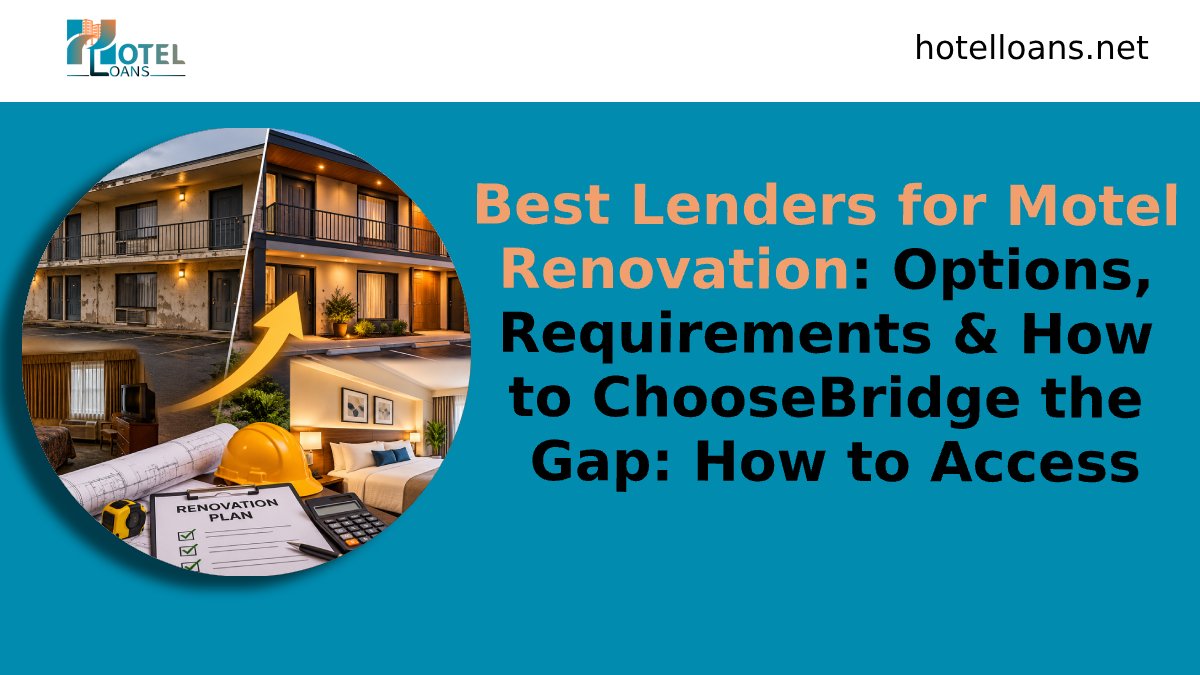
Right now, a massive 48 billion dollar wall of maturing hotel debt is crashing down on the hospitality industry. Think about this shocking fact: 32% of your fellow hotel owners are already delaying their renovation projects, and another 24% are scaling back because they cannot find the cash, according to recent data from the American Hotel & Lodging Association (AHLA). If you own a branded hotel, the clock is ticking loudly.
Brands are no longer letting you push off your Property Improvement Plans (PIPs). If you miss your deadline, you risk losing your brand flag, which can wipe out your property value overnight. You need a clear plan for financing hotel pip renovations before your lender gets nervous, your brand drops you, and your competitors steal your guests.
Is Your Flag at Risk? What Is Hotel PIP and How to Finance It Today
Let us look at the facts. A brand-mandated Property Improvement Plan is a direct order from your franchisor. They tell you exactly what you must change to keep using their name. This can include new signs, updated lobbies, fast Wi-Fi, and electronic locks. If you fail to do this, they will pull your brand.
Losing your flag is a nightmare. Your commercial mortgage has rules, and losing your brand name is usually a default. Suddenly, your lender can call your entire loan due. That is why learning what a hotel PIP is and how to finance it is the most critical task on your plate.
The current hotel market is split into two. High-end luxury hotels are still doing great. They are raising their room rates and making plenty of money. But limited-service, midscale, and economy hotels are feeling a tight squeeze. Operating costs are way up. Labor is expensive. Insurance rates are breaking records.
To make things harder, the era of cheap money is gone. Many owners took out loans between 2020 and 2022 at rates ranging from 3.0% to 4.5%. Now, those loans are maturing. New replacement mortgages cost 6.25% to 7.0% or more. Your payment costs will jump by 40% to keep the same amount of debt.
If your property needs a major upgrade at the exact moment your mortgage is maturing, you face a double whammy. You cannot ignore the rules. You need a trusted guide to hotel pip capital expenditure financing to protect your hard-earned equity.
We understand this pressure at HotelLoans.Net. We are a correspondent and table lender. We also act as a super broker to find you the best deals. We do not manage your hotel’s daily business. We bring 30 years of underwriting experience to help you set up the perfect capital structure. With up to 75 loan options through our private investor network, we ensure you have the exact financial tools you need.
How Much Cash Do You Really Need? Breaking Down the Cost of Hotel PIP Financing Options
How much does a PIP cost? The final bill depends on your brand, your building’s age, and your location.
If you own a select-service or midscale hotel, simple cosmetic updates like new carpets and drapes cost between $8,000 and $25,000 per room. If you have a 100-room hotel, you are looking at $800,000 to $2.5 million. If you own a full-service or luxury resort, those costs can easily cross $100,000 per room.
We compiled a table to show you what owners are paying right now to meet brand standards:
Chain Scale
Renovation Scope
Cost Per Key
Total Project Range
Economy / Midscale
Carpets, paint, and minor lobby updates
$8,000 – $15,000
$800,000 – $1.5 Million
Upper Midscale / Select-Service
Full guestrooms, case goods, lobby
$15,000 – $35,000
$1.5 Million – $3.5 Million
Full-Service / Upscale
Brand prototypes, structural changes
$40,000 – $85,000
$4.0 Million – $8.5 Million
Luxury / Resort
Custom design, tech, structural upgrades
$100,000 – $250,000+
$10.0 Million – $50.0 Million+
These brands want big changes. They want fast property-wide Wi-Fi, digital key entries, smart thermostats, and open lobby spaces. You cannot do these projects halfway. You must pay for both materials and high labor costs. This is why the total cost of hotel pip financing can catch you off guard if you do not plan ahead.
Let us look at a famous study from Cornell University. Their research shows that hotel real estate loses about 1.93% of its value each year after construction due to technological and design shifts. This is called functional obsolescence.
The study found a major turning point in year 28. Before that point, aging hotels sell for less. After year 28, the value of surviving hotels increases by about 0.7% per year. Why? Because these older properties undergo massive, deep renovations that reset their economic life. They become classic, high-value assets.
This study teaches us a vital lesson. A PIP is not just a painful brand requirement. It is a strategic tool. When you fund these physical updates, you mitigate natural property depreciation and set your hotel up for long-term appreciation.
Are You Squeezing Your Cash Flow? How to Finance Hotel PIP Renovations Now
You want to protect your personal cash. You do not want to dump all your liquid savings into a renovation. So, how do you get the cash?
If your hotel has plenty of equity and strong cash flows over the last 12 months, you can refinance your existing mortgage. You can roll your PIP costs into a new permanent first mortgage. This is called refinancing the hotel for pip expenses.
For large, stable hotels, commercial mortgage-backed securities (CMBS) are a popular route. They offer 5-year or 10-year fixed rates. They are also non-recourse, which means the lender cannot come after your personal assets if things go wrong. But your cash flow must support the new, larger loan balance. Lenders today want to see a Debt Service Coverage Ratio (DSCR) of 1.35x to 1.40x. If your cash flow is too tight, the lender will cut your loan size.
If you run the hotel yourself, you should look closely at government-backed programs. Using SBA loans for hotel pip projects is a smart way to get long-term fixed rates with low down payments.
The SBA 504 program is a great tool. It splits your funding into three parts. A private bank covers 50% of the cost. A Certified Development Company (CDC) covers 30% to 40% with an SBA-backed bond. You only put down 10% to 15%. Because hotels are single-purpose properties, lenders will usually require a 15% equity injection.
The CDC portion gives you a long-term, below-market fixed rate. For example, 25-year SBA 504 rates are highly competitive at 5.72%, helping protect you against inflation.
The SBA 7(a) program is another option. It offers up to $5 million. The interest rates are usually variable and tied to the Prime rate, but the program is highly flexible. You can use it to buy a property, fund your PIP, acquire your franchise license, and secure working capital all at once.
Let us compare these two SBA options:
Feature
SBA 7(a) Loan Program
SBA 504 Loan Program
Primary Use
Acquisitions, PIPs, working capital
Real estate, construction, major upgrades
Max Loan Size
$5.0 Million
No project max (CDC cap is $5M–$5.5M)
Rate Structure
Variable (tied to Prime)
Fixed, below-market on CDC portion
Down Payment
10% – 15%
15% for special-purpose hotels
Prepayment
None for short terms; low for real estate
Strict sliding scale for initial years
If a senior mortgage refinance or an SBA loan does not work, you must look for alternative financing for hotel pip. C-PACE (Commercial Property Assessed Clean Energy) is a great alternative. It funds energy-efficient upgrades, HVAC systems, lighting, and water conservation. C-PACE is structured as a property tax assessment with fixed terms up to 30 years. It stays with the property if you sell it. You just need your senior lender to consent.
You can also look at mezzanine debt or preferred equity. These options sit behind your senior mortgage and can push your total leverage up to 75% or 80%. But mezzanine capital is expensive. You should expect interest rates between 11% and 14% for this gap funding.
Who Will Fund Your Rebrand? Comparing Hotel PIP Financing Providers
Not all lenders are the same. When you start comparing hotel pip financing providers, you must look for partners who understand the hospitality world. Hotels do not work like normal commercial buildings with long-term tenants. They have 24-hour guest agreements and seasonal revenue swings.
We know the best lenders for hotel PIP financing are those that evaluate hospitality-specific metrics. They focus on Revenue Per Available Room (RevPAR) and Average Daily Rate (ADR) rather than generic commercial templates.
Let us look at the main options:
Traditional Banks: They offer the lowest interest rates and great construction terms, but they are highly selective. They usually require full personal guarantees and expect you to keep your deposits with them.
Private Debt Funds: They are highly active in the bridge loan space and can close deals in just a few weeks. They are comfortable with underperforming properties, but their rates are floating and carry a high premium over SOFR.
Life Insurance Companies: They offer amazing fixed rates but limit their leverage to 55% or 65% of the property value. They only focus on premium, top-tier branded hotels.
We help you bypass the stress of searching. At HotelLoans.Net, we use our 30 years of underwriting perspective to match your project with the right capital source. We do not run your hotel operations. Instead, we specialize strictly in real estate investment properties. Whether you need land purchase loans, ground-up construction loans, or a quick bridge loan, we offer 75 loan options.
We also support real estate professionals. We offer both exclusive and non-exclusive referral programs for hospitality real estate brokers. If you are a broker, we help you get your deals funded quickly while earning great commissions.
Do You Know What You Are Signing? Understanding Hotel PIP Financing Terms
Before you sign a commitment letter, make sure you have a clear grasp of your debt terms. Spending time understanding hotel pip financing terms will protect you from unexpected defaults.
First, you must understand the strict hotel pip financing requirements. Lenders do not hand out capital based on a rough guess. They require a complete underwriting package. This includes:
The brand’s official PIP scope letter.
Line-item construction budgets with contractor bids.
12 months of independent STR (Smith Travel Research) reports.
Three to five years of pro forma projections showing your expected revenue bump.
A clean personal credit score (lenders usually want 680 or higher, though some go down to 640 for strong deals).
Verified liquid assets equal to 10% of the loan amount or 12 months of payments.
Second, you must analyze your hotel’s pip loan interest rates. Rates vary wildly depending on which program you choose.
Variable SBA 7(a) loans range from 9.0% to 11.5% APR in the current environment.
Fixed SBA 504 debentures range from 5.7% to 6.5%.
Fixed-rate CMBS loans range from 5.85% to 7.5%.
Private bridge loans and short-term PIP capital hover between 8.5% and 13.5%.
Mezzanine debt sits at the top, ranging from 11.0% to 14.0%.
Third, you must weigh the pros and cons of hotel pip financing models.
SBA 504 loans offer incredible fixed rates and low down payments, but they take 60 to 90 days to close and involve high fees. CMBS cash-outs give you non-recourse peace of mind. Still, they carry massive prepayment penalties and give you zero operational flexibility. Bridge loans offer lightning-fast closing times and interest-only periods. Still, they mature in 12 to 24 months and carry high variable rates.
Can an Unflagged Property Secure Funding? Hotel PIP Financing for Independent Owners
If your property does not have a major franchise name like Marriott or Hilton, you face a unique challenge. Lenders love big brands because their loyalty programs and booking systems secure steady demand. Securing hotel pip financing for independent owners requires a customized capital stack.
Lenders will place far more weight on your personal track record, your local market position, and your actual cash flows. Private debt funds and bridge lenders are often the best fit for independent properties because they focus on the asset’s real-world turnaround potential.
If you are looking to franchise an unflagged property, our best advice on PIP financing is to treat your PIP as a negotiation. Brands want to expand their footprints. If you have clean guest quality scores, you can negotiate to phase your renovation over multiple low-season winters to protect your cash flow. You can also ask the brand for value-engineered design alternatives to keep costs down.
At HotelLoans.Net, we provide the consulting, underwriting guidance, and real estate loans you need to succeed. We handle hotels, motels, restaurants, and vacation properties. We also offer land purchase and construction-to-permanent options.
Your Path Forward
Do not let a brand-mandated PIP push you out of business. You now know exactly how to finance hotel pip renovations using the right capital structures. Whether you need a short-term bridge loan, a low-rate SBA program, or a flexible alternative structure, we have you covered. Contact HotelLoans.Net today to explore our 75 distinct loan programs and let us fund your real estate investment success.
FAQs
Does PACE cover cosmetic hotel upgrades?
No, PACE only pays for green upgrades like new lights, smart water showers, and strong windows. We cannot use this cash for pretty things like soft carpets, colorful wallpaper, brand signs, or new lobby chairs. You must use other loans.
Do lenders require personal guarantees?
Yes, most banks and government programs require you to sign a personal guarantee. This means lenders can take your home or personal assets if your hotel business fails to repay the heavy renovation debt on time.
Does independent hotel financing take longer?
Yes, lenders spend much more time checking unflagged hotels because you do not have a big brand sending you guests. We must show them extra proof of your local success and good management before they give you the cash.
Can you use PIP loans for land?
No, PIP money is only for fixing up your standing hotel buildings and buying new room items. If you want to buy empty land, we can help you get a different loan specifically for buying property.
Is there a prepayment penalty on SBA?
Yes, the SBA 504 program charges a fee if you pay it off early in the first 10 years. This fee makes it costly to refinance soon if you want to sell your hotel quickly after the PIP.
Facebook Twitter Pinterest LinkedIn An independent motel renovation loan pays for repairs at a motel with no brand. Lenders look at your cash flow, your
Facebook Twitter Pinterest LinkedIn Old rooms lose guests. Fast. A tired lobby, worn carpet, or a noisy air conditioner sends travelers to the motel next
Facebook Twitter Pinterest LinkedIn Commercial real estate is heading into a heavy refinancing stretch. The Mortgage Bankers Association reports that roughly $875 billion in commercial
Facebook Twitter Pinterest LinkedIn Right now, unrenovated hotels are losing up to 39% of their potential income while new construction costs surge past $742,000 per
Ready to Discuss Your Hotel's Financial Strategy? Need a Commercial Loan?
Contact us today at Hotel Loans to initiate a conversation about how our financial expertise can contribute to the success of your hotel business. Our experienced team will be happy to help you.


 Google AI
 ChatGPT
 Perplexity