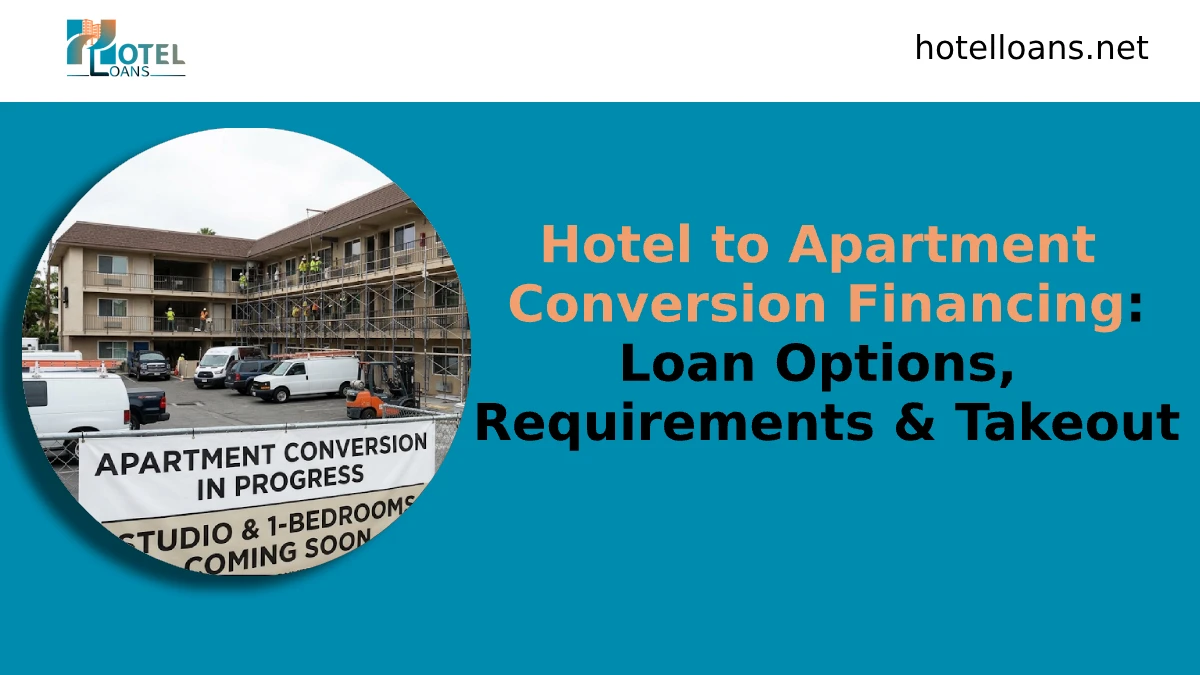
Quick answer: Most hotel conversions use three loans in order. A bridge loan buys the hotel. A construction draw pays for the rehab. An agency or permanent loan pays off the bridge after lease-up. This guide shows the numbers, the rules, and the mistakes that sink deals.
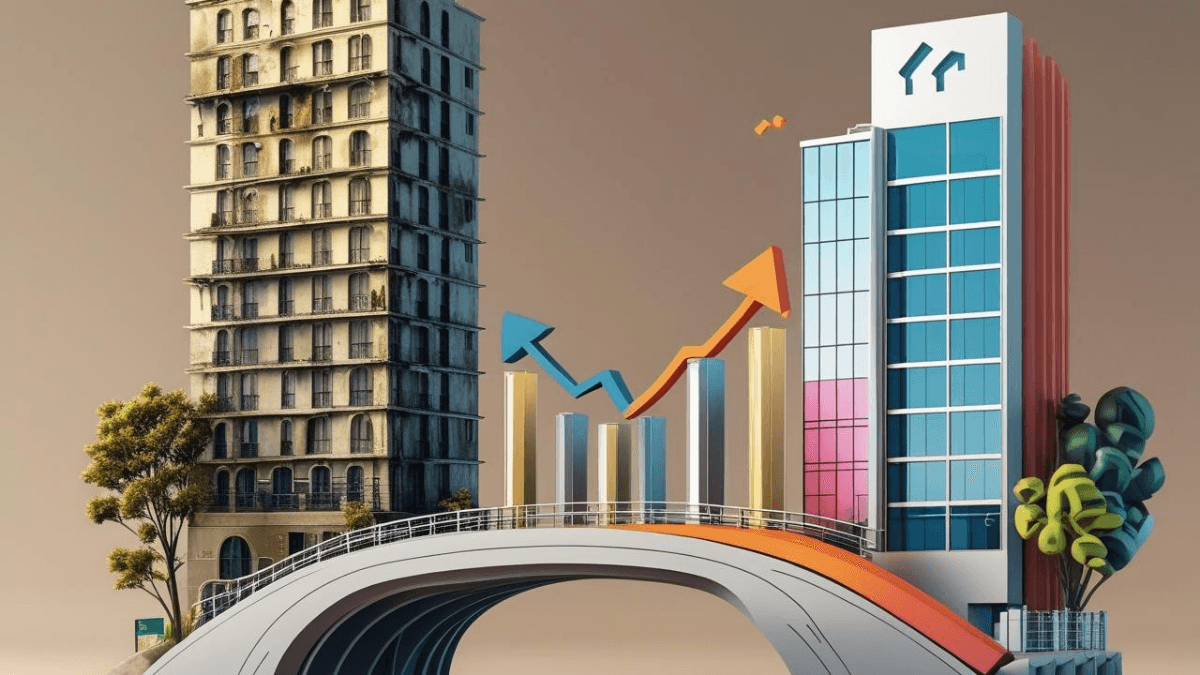
Builders face high costs. Hotel owners face heavy debt. Those two facts meet in the middle.
In 2024, developers delivered 24,735 converted apartments. That is 50% more than in 2023. Hotels gave the most units, at 9,108. That is 37% of the total. Over 93% of them came from Class B and C hotels.
Debt stress adds pressure. Trepp tracks loans that move to special servicing. In August 2026, the rate for CMBS lodging loans was 8.74%. The overall CMBS rate was 11.42%. Many owners face loan maturities and brand upgrade bills. Some will sell.
Conversions are not only an office story. Here is where units were delivered in 2024:
City
Converted units
What drove it
Chicago
880
Four projects
Denver
789
Includes a hotel turned into 215 supportive units
Philadelphia
761
Historic and commercial buildings
Dallas
698
Three projects, including an office tower
Manhattan
588
One office tower
Baltimore led hotel conversions alone. Two downtown towers became 550 apartments. Kissimmee and Jacksonville followed.
How much cheaper is a Hotel to Apartment conversion Financing?
Often much cheaper. Not always. A hotel already has a roof, walls, stairs, elevators, plumbing stacks and parking. You pay to change rooms, not to build a shell.
Sources differ by market. In California, Terner Center research found hotel conversions averaged about $148,000 per unit under the Homekey program. New affordable units cost about $425,000. Other projects report all-in costs near $100,000 to $180,000 per unit. New builds in costly coastal markets can run $380,000 or more.
Treat these as ranges, not promises. Your price depends on the building, the city and the scope.
Time matters too. New buildings often take 24 to 48 months. Many conversions take 6 to 18 months. Less time means less interest paid on idle money.
Want a second opinion on your numbers? Send us your deal and we will review it.
What are the three loans in a conversion?
Think of the deal in phases.
Phase 1: Buy. A bridge loan funds the purchase. Terms often run 12 to 36 months. Payments are usually interest only. Many lenders add an interest reserve, so you do not pay out of pocket during the rehab.
Phase 2: Build. A construction loan or future funding pays for the work. An inspector checks progress before each draw.
Phase 3: Exit. After lease-up, a permanent loan pays off the bridge.
Lenders also study you. They want to see experience with multifamily or construction. If you are new, bring a strong contractor and property manager.
What does a real capital stack look like?
Here is a simple example. These numbers are for illustration only. Your deal will differ.
A 100-room hotel:
Purchase: $6.0 million
Renovation: $4.0 million
Fees, soft costs and interest reserve: $1.5 million
Total cost: $11.5 million, or $115,000 per unit
A possible capital stack:
Senior bridge debt at 70% of cost: $8.05 million
Mezzanine debt or preferred equity at 10%: $1.15 million
Your equity at 20%: $2.3 million
That adds up to 100%.
Now test the exit. Say you lease all 100 units at $1,300 a month and hold 93% occupancy. Income is about $1.45 million. With 40% going to expenses, net operating income is about $870,000.
Agency lenders size a loan on two tests. They use the lower result.
Loan to value. At a 6.5% cap rate, value is about $13.4 million. A 75% loan is about $10 million.
Debt service coverage. At a 1.25 ratio and a 6.5% rate with 30-year payments, the loan is about $9.2 million.
The lower number wins. Here, the exit loan of about $9.2 million barely repays the bridge and mezzanine debt, which also total $9.2 million. There is no room for error. This is why you must test the exit before you buy. Learn how lenders read debt service coverage ratio before you sign.
Which loans do not fit apartment conversions?
Some popular products look right but are not. Check these early.
SBA 7(a) and 504. The SBA backs owner-occupied business property. Passive rental real estate is excluded. For 504, the business must occupy at least 51% of an existing building. An apartment-only conversion does not fit. A hotel you keep operating may. See our SBA loan options.
Old CMBS or bank debt. A CMBS loan bundles loans into bonds. It has strict rules and costly early payoff terms. Servicers rarely let a borrower shut down hotel operations. Plan to pay off old debt with a bridge loan. Our guide to refinancing maturing hotel debt explains how. Our post on bridge loans for distressed hotel buys adds more.
What zoning and code issues come up?
Hotels sit in commercial zones. Apartments are a change of use.
By-right use. Permits move faster.
Conditional use or rezoning. You need public hearings. Many lenders will not fund senior debt until approval is final.
Parking. Apartments may need more spaces than a hotel did. You may need a variance.
Building code. Hotels and apartments are both residential groups under the International Building Code. That can make the code path simpler than office conversions. Your local code official decides, so ask early.
Life safety. Expect fire separation walls, sprinkler work and kitchen venting.
Some states and cities now help. California’s Homekey program funds hotel and motel conversions for housing. Check your local rules before you bid.
Add a franchise check. If the hotel has a flag, ask what it costs to leave. Termination fees and brand upgrade plans can change your price. Our posts on capital for hotel flag conversions and hotel PIP financing cover these costs.
Most owners refinance into long-term debt after lease-up.
Fannie Mae and Freddie Mac. Both offer multifamily loans through approved lenders. See Fannie Mae Multifamily and Freddie Mac Multifamily. A common stabilization test is 90% occupancy for 90 days. Each lender sets its own rules.
HUD. Section 221(d)(4) covers substantial rehab and new builds. Section 223(f) refinances existing properties. HUD loans can reach 35 years. HUD limits changed in 2025, so confirm current terms on HUD’s site or with a HUD lender.
Bank or DSCR loans. These work for smaller deals or slower lease-ups.
No exit is guaranteed. Rates move. Lease-up can lag. Build a cushion into your plan.
Is your hotel a good candidate?
Say yes to most of these before you move ahead:
Rooms are about 250 to 350 square feet, or can combine into studios.
Zoning allows apartments, or approval looks likely.
Local rents support the project at your cost per unit.
The seller can close fast.
You can exit the franchise at a known cost.
Your exit loan sizes above your bridge debt.
Not sure? Request a loan review. Tell us the price, the room count and your plan. We will tell you which structure fits.
FAQs
How much does a hotel to apartment conversion cost?
Many projects land between $100,000 and $180,000 per unit all in. Costs vary by market and scope. New builds in costly markets can run $380,000 or more.
How long does a conversion take?
Many take 6 to 18 months. New apartment buildings often take 24 to 48 months.
What loan do I need first?
Most buyers start with a bridge loan. It funds the purchase and often includes money for the rehab.
Can I use an SBA or USDA loan to build apartments?
Usually not. SBA excludes passive rental real estate. USDA B&I excludes rental housing.
How much equity do I need?
Senior lenders often cover 65% to 85% of cost. You fill the rest with equity, mezzanine debt or preferred equity.
What is the best exit loan?
It depends on size, rents and timing. Agency and HUD loans offer long terms. Banks and DSCR lenders can suit smaller deals.
Ready to test your deal?
Send us the address, the price and your plan. We will review your numbers and match your project to the right loan options. Start your loan request today.
Loan terms, rates and program rules change often. This article is general information, not financial or legal advice. Confirm current terms with a lender and your advisors.
Facebook Twitter Pinterest LinkedIn An independent motel renovation loan pays for repairs at a motel with no brand. Lenders look at your cash flow, your
Facebook Twitter Pinterest LinkedIn Old rooms lose guests. Fast. A tired lobby, worn carpet, or a noisy air conditioner sends travelers to the motel next
Facebook Twitter Pinterest LinkedIn Commercial real estate is heading into a heavy refinancing stretch. The Mortgage Bankers Association reports that roughly $875 billion in commercial
Ready to Discuss Your Hotel's Financial Strategy? Need a Commercial Loan?
Contact us today at Hotel Loans to initiate a conversation about how our financial expertise can contribute to the success of your hotel business. Our experienced team will be happy to help you.

 Google AI
 ChatGPT
 Perplexity