
 Google AI
 ChatGPT
 Perplexity
Right now, a silent crisis is sweeping through the American hospitality market. Over $150 billion in commercial real estate loans are reaching maturity, and many owners are completely unprepared. If you own a hotel, motel, or resort, your clock is ticking. Investors who wait even a few weeks to lock in their financing are watching their cash flow bleed away as rates stabilize. The era of ultra-cheap money is dead and will not return. If you do not master the facts about hotel loan interest rates today, you risk losing your property to foreclosure or missing the deal of a lifetime.
Do not let that happen to you. We are here to guide you through this challenging landscape. At HotelLoans.Net, we have 30 years of underwriting experience to back your play. We are a correspondent lender, a table lender, and a super broker. This means we can either fund your deal directly or find the perfect match through our massive network. We offer 75 distinct loan options for real estate investment properties.
We do not run your hotel business. We cannot help you hire staff, manage room service, or design your dinner menu. But we can help you win the real estate game. We provide financial consulting to help you buy land, build ground-up projects, do a quick fix-and-flip, hold a property for long-term wealth, or refinance your current debt. Let us look at the five big factors that decide your rate today.
What is the Macroeconomic Climate and How Does the Prime Rate Impact Hotel Loans?
Lenders do not pull numbers out of thin air. They base your rate on the wider economy. When major national benchmarks change, your rate changes too.
Evaluating Current Hotel Loan Interest Rates Today
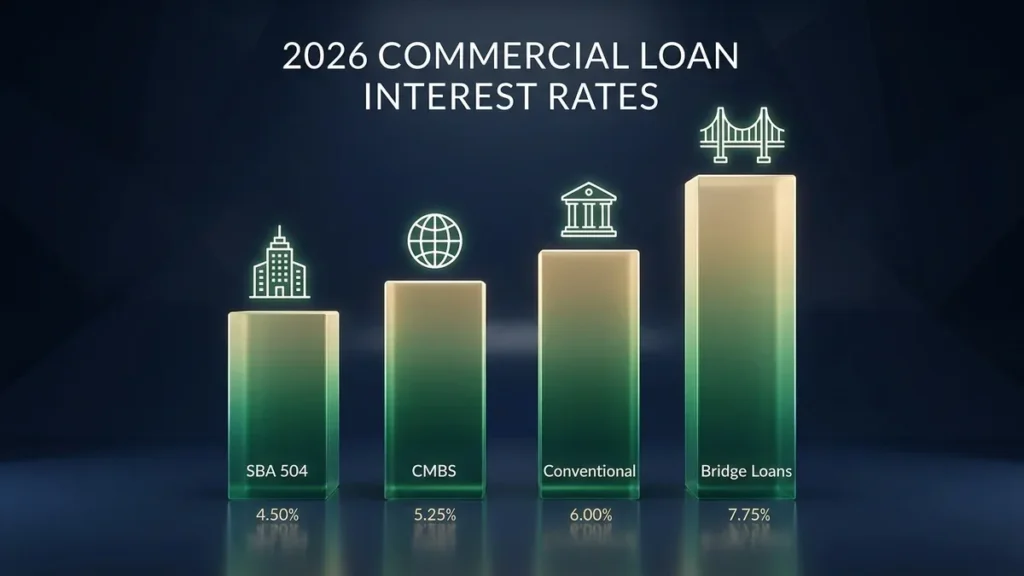
Let us look at the numbers right now. The cost of money depends on the type of loan you choose. Traditional bank loans start around 6.50% and go up to 9.50%. Short-term bridge loans and hard-money options range from 5.75% to 12.75% or higher.
Lenders calculate your rate by adding a safety margin to a risk-free index. For long-term fixed loans, they look at the 10-Year U.S. Treasury yield. Right now, that yield is hovering between 4.27% and 4.47%. If a lender adds a 200-basis-point spread to a 4.47% Treasury yield, your final rate is 6.47%.
Let us look at the common benchmarks in this simple table:
| Index Name | Today’s Rate Level | Common Lender Spread | Average Final Rate |
| Fed Funds Rate | 3.50% to 3.75% | N/A | N/A |
| 30-Day SOFR | 3.60% | 2.50% to 5.00% | 6.10% to 8.60% |
| 10-Yr Treasury | 4.27% to 4.47% | 2.00% to 3.50% | 6.27% to 7.97% |
| Prime Rate | 6.75% | 1.00% to 3.00% | 7.75% to 9.75% |
Fixed vs Variable Hotel Loan Interest Rates
You must choose between a fixed or floating rate. A fixed rate stays the same for the life of the loan. It gives you peace of mind and steady monthly payments.
A variable rate changes over time. These rates usually tie to the 30-Day Secured Overnight Financing Rate (SOFR) or the Bank Prime Rate. Let us look at the impact of the prime rate on hotel loans.
The Bank Prime Rate is 6.75%. It changes when the Federal Reserve moves its target rate. If the Fed cuts rates, your Prime-based payment drops. If the Fed raises rates, your payment spikes immediately. Many SBA 7(a) loans use variable rates. You must watch this index closely.
Let us look at SOFR. This index replaced LIBOR. It measures the cost of borrowing cash overnight backed by U.S. Treasury securities. Lenders compile SOFR over 30-, 90-, or 180-day tenors. It is highly sensitive to the Federal Reserve. A sudden policy change can make your monthly payment jump.
Why You Must Know About Rate Caps
Floating rates can be risky. To protect yourself, you should consider understanding caps on hotel loan interest rates.
A rate cap is an insurance policy. You pay an upfront fee to buy a cap from a financial institution. The cap sets a ceiling on how high your index rate can rise. If the index shoots past your cap, the seller pays the difference. This keeps your monthly payment safe. Underwriters often require rate caps on bridge loans to make sure you can always cover the debt.
Think of a rate cap as a safety net. If you have a SOFR-based loan at 3.60%, you might buy a cap at 5.00%. If inflation spikes and SOFR rises to 6.00%, your interest rate is capped at 5.00%. The peace of mind is worth the upfront cost.
Underwriting Standards: What Are the Key Factors Affecting Hotel Loan Interest Rates?
Lenders view hotels differently from office buildings or retail strip centers. A hotel is an active operating business, not just physical real estate. Guests check in and check out every day. This makes your revenue highly variable. Underwriters consider specific factors that affect hotel loan interest rates.
What Are Typical Hotel Mortgage Interest Rates for Operating Properties?
To understand what typical hotel mortgage interest rates are, you must look at how your property performs. Lenders evaluate three major metrics:
First, they look at your Average Daily Rate (ADR). This is the average price a guest pays per night for a room.
Second, they check your Occupancy Rate. This is the percentage of rooms filled across the year.
Third, they calculate your Revenue Per Available Room (RevPAR). You find this by multiplying ADR by your Occupancy Rate. This is the gold standard of hotel health.
RevPAR = ADR * Occupancy Rate
Properties with steady RevPAR growth get the best rates. High-performing hotels show they can handle economic downturns. A study from Harvard Business School shows that, because hotels are active businesses, having a great third-party manager is crucial to maintaining high revenue and securing low rates.
Debt Service, LTV, and the Power of Debt Yields
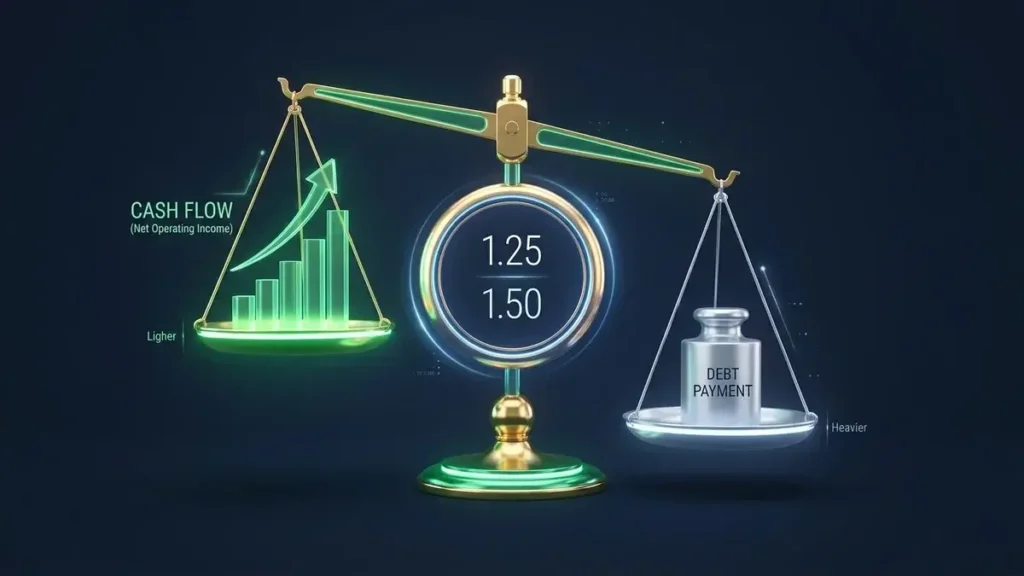
Lenders use hard math to measure risk. They rely on the Debt Service Coverage Ratio (DSCR). Let us write down the simple formula:
DSCR = {Net Operating Income}\{Annual Debt Service}
Most commercial lenders want to see a DSCR of 1.25x to 1.50x. This means your hotel makes 25% to 50% more cash than you need for your loan payment.
They also look at your Loan-to-Value (LTV) ratio. Bank loans usually cap at 55%-75% LTV. Government programs like the SBA can go up to 85% or 90%. Higher LTV means more risk for the lender, which usually raises your rate.
Lenders also check your Debt Yield. Let us look at this formula:
Debt Yield = {Net Operating Income}\{Total Loan Amount}* 100
Today, major lenders require a Debt Yield of at least 13.5% to 15% to offer the best rates. If your Debt Yield is low, you will pay a higher rate or need to bring more cash to the closing table. Lenders use this number because it does not depend on interest rates or amortization schedules. It shows their true risk if they have to take over the property.
Matching the Property to the Loan: Are Boutique Hotel Loan Interest Rates Higher?
The type of hotel you buy or build changes your funding options. Brand-name hotels have a big advantage. Independent and boutique properties face a different set of rules.
Independent Risk: Small Hotel Acquisition Loan Interest Rates
Branded hotels like Hilton, Marriott, or IHG have massive booking engines. They automatically attract business travelers and loyal vacationers. Lenders love this predictability.
If you buy an unbranded property, your small hotel acquisition loan interest rates will likely be higher. Lenders view independent motels as high-risk projects. They do not have a corporate marketing team backing them up.
To offset this risk, you must show deep experience in running hotels. You will also need a larger down payment. Traditional banks might cap their leverage at 60% LTV for unflagged assets, meaning you must bring 40% equity to the deal.
Our team can help you find alternative funding sources. We can arrange options such as Commercial Property Assessed Clean Energy (C-PACE) loans, which offer long 30-year terms that can lower your weighted cost of capital. Let us look at how interest rates on boutique hotel loans behave.
Boutique properties focus on guest experiences. While travelers love them, banks can be slow to finance them because they do not fit into neat boxes. We can help you build a custom package that proves your asset’s value to our private investor network.
Government-Backed Savings: Average SBA Hotel Loan Interest Rates
If you are an owner-operator, you should look at U.S. Small Business Administration programs. The SBA guarantees a large portion of your loan, which lowers the lender’s risk. This translates into some of the most competitive terms in the market.
Let us look at the average interest rates on SBA hotel loans.
The SBA 7(a) program is highly popular. You can use it to buy a hotel, purchase equipment, or secure working capital. It offers up to $5 million in funding with up to 90% LTV. These rates are usually variable and tied to the Prime Rate. Today, SBA 7(a) variable rates range from 7.00% to 9.50%.
The SBA 504 program is designed specifically for real estate purchases and construction. It splits your loan into two parts. A traditional bank provides a first mortgage for 50% of the cost. A Certified Development Company (CDC) provides a second mortgage of up to 40% that is backed by the SBA. You only have to bring a 10% to 15% down payment.
The CDC portion of the 504 loan offers an incredibly low, fixed rate. For a 25-year term, rates are currently running between 5.88% and 6.17%. This is one of the best ways to hedge against inflation and secure long-term stability.
Let us look at USDA Business & Industry loans. If your hotel is located in a rural town with fewer than 50,000 residents, this is a great path. You can get up to 80% LTV with long amortization terms. It supports local job creation and offers low fixed or variable rates.
Project Execution and the Lifecycle of Hospitality Debt
Your financing needs change over time. A ground-up build requires a different loan than a stabilized, operating asset. Let us look at how these phases compare.
How Do Builders Compare Costs? Hotel Construction Loan Interest Rates Comparison
Building a hotel is the most complex phase of real estate. You have to buy land, hire contractors, manage delays, and wait months before your first guest walks through the door. This phase carries massive risk.
Because of this risk, a comparison of hotel construction loan interest rates shows that builders pay a premium. These loans are short-term, interest-only, and feature variable rates. Lenders price construction debt as a spread over SOFR.
In today’s market, construction rates range from 5.50% to 8.75%. Lenders typically limit your loan to 65% or 75% of the total construction cost. You must show a clear exit strategy. How will you pay back the construction lender once the building is complete? You will need a takeout loan or a refinancing plan.
A construction-to-permanent loan is a highly useful tool. It rolls your short-term build-to-suit loan into a long-term commercial mortgage once your hotel is open for business. This saves you a second round of closing costs and protects you from rising rates during the build phase.
Upgrading Your Property: Hotel Renovation Loan Interest Rates
Even if you do not build from scratch, you must keep your property fresh. If you own a branded hotel, the franchisor will require a Property Improvement Plan (PIP) every few years. This plan forces you to upgrade carpets, bedding, technology, and lobbies.
Securing competitive interest rates on hotel renovation loans is vital. You can use bridge loans, mezzanine debt, or a commercial line of credit.
Bridge loans are perfect for this phase. They are interest-only loans with terms of 12 to 36 months. While the rates are higher (ranging from 8.50% to 13.50%), they give you breathing room to complete your renovations and raise your room rates. Once your hotel is upgraded and revenue stabilizes, you can refinance into cheaper permanent debt.
For faster execution, some owners consider hard-money options. These are asset-backed loans that close in as little as ten days. The rates are high, often reaching 10.00% to 18.00%. Still, they require less paperwork and help you grab distressed properties before anyone else can bid.
Capital Sourcing: Where Can You Find the Best Banks for Hotel Loan Interest Rates?
The commercial debt market is massive and fragmented. To get the best deal, you must target the right class of lender for your specific deal.
Local Interventions: Comparing Hotel Loan Interest Rates of Regional Banks
Let us start with local players. When comparing hotel loan interest rates with regional banks, you will find highly personalized service. These banks understand their local markets deeply.
Regional banks offer solid rates, usually ranging from 6.50% to 9.50%. However, they are conservative. They cap their leverage at 55%-70% LTV. They almost always require personal recourse. This means that if the hotel fails, the bank can come after your personal savings, home, and other assets to recover its cash.
If you want to protect your personal balance sheet, you should look at Commercial Mortgage-Backed Securities (CMBS). CMBS conduit loans are non-recourse. The lender’s only recovery is the hotel property itself.
CMBS lenders are highly active in 2026. They pool commercial mortgages together and sell them to investors on the secondary market. Today, CMBS rates range from 6.18% to 7.97% with fixed 5- to 10-year terms. Data shows that hospitality is one of the few real estate sectors still delivering positive leverage, meaning your property’s yield is higher than your borrowing costs.
Let us look at Life Insurance Companies. If you own a large, stabilized hotel in a major city like New York or Miami, these lenders offer the absolute lowest rates. Their rates range from 5.68% to 7.97%. But they are highly selective. They require a low LTV (under 60%) and a massive loan amount, typically starting at $10 million.
Let us compare your primary bank and non-bank options in this table:
| Loan Type | Average Rate in 2026 | Max LTV/LTC Limit | Recourse Rules | Best Use Case |
| SBA 504 | 5.88% to 6.17% | Up to 85% | Fully Recourse | Owner-operators buying land or building |
| SBA 7(a) | 7.00% to 9.50% | Up to 90% | Fully Recourse | Purchases with working capital needs |
| Regional Bank | 6.50% to 9.50% | 55% to 70% | Fully Recourse | Stabilized flagged hotels in local areas |
| CMBS / Conduit | 6.18% to 7.97% | 55% to 70% | Non-Recourse | Large flagged properties over $5M |
| Life Insurance | 5.68% to 7.97% | 55% to 70% | Non-Recourse | Institutional assets in top markets |
| Bridge Loan | 8.50% to 13.50% | 65% to 80% | Non-Recourse | Properties needing fast renovation |
We help you weigh these trade-offs to find the best banks for hotel loan interest rates.
Stepping Out of Bridge Debt: Hotel Refinance Loan Interest Rates 2026
Many hoteliers are currently stuck in high-interest bridge loans or facing maturing balloon payments. This is where hotel refinance loan interest-rate programs for 2026 come into play.
Refinancing allows you to pay off short-term debt and lock in a long-term fixed rate. For example, you can transition out of a 12.00% bridge loan into a 6.00% SBA 504 loan. This move immediately cuts your interest expense in half and boosts your monthly profit. Do not wait for your maturity date to plan this transition. Start your refinance plan at least six months before your current loan expires.
For developers who need to unlock equity, cash-out refinancing is also an option. You can pull built-up equity out of a stabilized property to fund your next acquisition or construction project. We can guide you through the process of qualifying for these programs.
Strategic Advice: How to Get the Lowest Hotel Loan Interest Rates
You do not have to accept the first rate a bank quotes you. You have the power to optimize your financial profile and reduce your borrowing costs. Let us look at how to get the lowest hotel loan interest rates.
First, protect your credit score. Traditional commercial banks prefer a personal credit score of 680 or higher. While some private lenders will look past a lower score, a higher score always unlocks lower rates and better terms.
Second, keep cash in reserve. Lenders want to see post-closing liquidity. They favor borrowers who keep 6 to 12 months of debt service payments in bank accounts. This proves you can handle unexpected seasonal dips in guest travel.
Third, pick a strong brand flag. Brand affiliation lowers the lender’s risk. If you choose an independent path, hire a proven third-party management company with a great track record.
Fourth, work with an experienced advisor. We have 30 years of underwriting experience to help you present your deal in the best light. We package your financial statements, RevPAR metrics, and market studies to speak the lender’s language.
We also offer referral programs for commercial real estate brokers. If you are a broker, you can partner with us on an exclusive or non-exclusive basis. This program allows you to offer our consulting and 75 different loan options directly to your clients. We help you close more deals and earn top commissions, whether you are an experienced broker or brand new to the industry.
Let us look at how no-doc and lite-doc loans can help. If you have complex tax returns or a high amount of write-offs, traditional banks might reject your application. We offer no-doc and lite-doc investment loans that focus on the cash flow of the property rather than your personal tax history. This keeps your financial life simple and moves your project forward.
Secure Your Financial Future
The hospitality real estate market is moving fast. Maturing loans and changing economic policies mean that the actions you take today will decide the future of your property. Do not let rising costs eat your profits.
Locking in the right hotel loan interest rates is the single most important step to protecting your cash flow. Let us do the heavy lifting for you. Reach out to us at HotelLoans.Net today. Let us check your project and match you with the absolute best rate from our 75 investment loan options. Your next great deal starts with one simple call.
FAQs
Can you refinance with prepayment penalties?
Yes. We can help you calculate if your interest savings will outweigh the exit fee. Do not let upfront fees scare you away from locking in a lower rate today. Call us now to protect your cash flow.
Can you get cash back when refinancing?
Yes. You can unlock equity from your stabilized property to fund your next big commercial project. Stop leaving your cash trapped in real estate. Reach out to our experts today and start building your wealth.
Can you refinance with bad credit?
Yes. We offer 75 distinct loan options, including no-doc and asset-backed programs that focus on property cash flow instead of your personal credit score. Take control of your debt now and fund your deal through our private network.
Can you remove business partners when refinancing?
Yes. A cash-out refinance allows you to buy out your current partners and gain complete ownership of your property. Do not stay stuck in bad business relationships. Call us today to find a program that sets you free.
Must you occupy the refinanced property?
No. We provide custom financial solutions strictly for real estate investment properties that you do not have to live in or run yourself. Take the leap and secure your financial future by giving our team a call today.