 Google AI
 ChatGPT
 Perplexity
The hospitality world is changing fast as we move through 2026. Mordor Intelligence experts estimate the global hospitality real estate market at $5.12 trillion this year. This number is growing. By 2031, it could hit $6.27 trillion. For many, owning a motel is the American dream. Roadside inns and boutique motels offer a unique way to build wealth. However, the path to ownership is paved with complex numbers. You need the right money behind you to win.
Many investors face a “maturity wall” right now. About $48 billion in hospitality debt is due soon. This means banks are being very careful. They want to see strong plans and modern assets. If you want to buy land for a hospitality property or fix up an old inn, you need a partner who knows the ropes. HotelLoans.Net offers 30 years of underwriting experience. They provide access to 75 different loan options. They act as a consultant and super broker to help you navigate motel financing.
What are the best ways to handle motel financing?
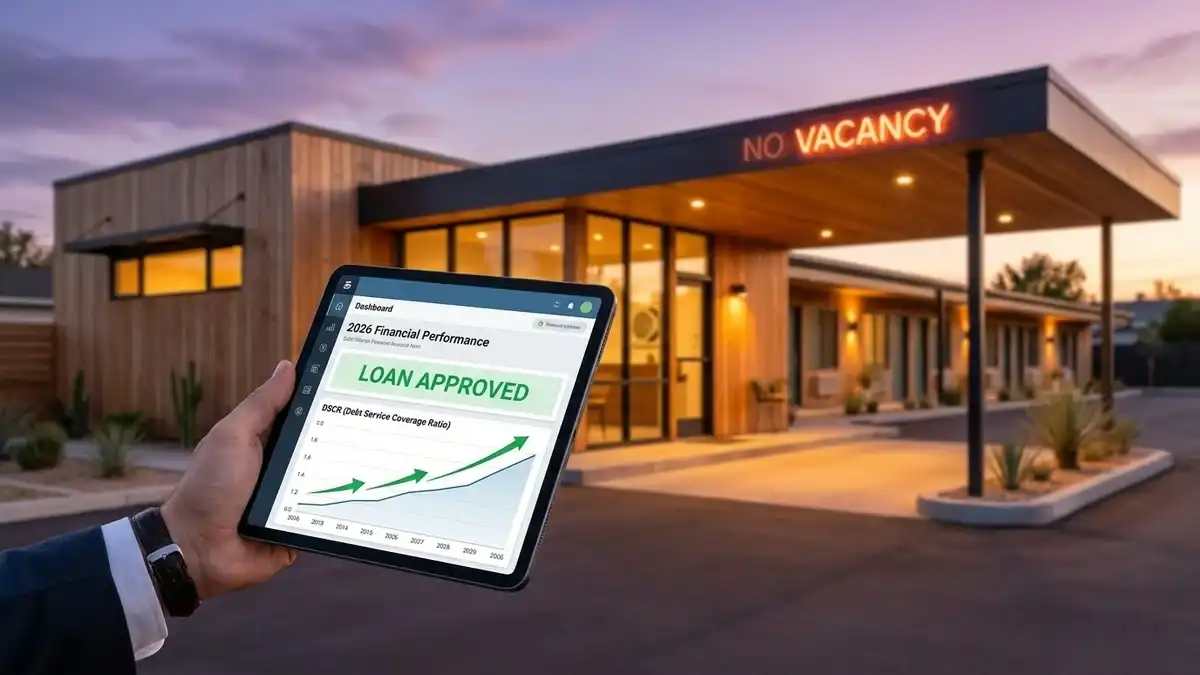
Choosing the right money strategy depends on your goals. Some people want to buy an existing property. Others want to build a new one from the ground up. You might even want to “fix and flip” a distressed motel. Each path needs a different type of loan. Banks look at your personal money and the property’s income. They use a metric called the Debt Service Coverage Ratio (DSCR). Most lenders want a DSCR of 1.25 to 1.40. This means the motel earns 25% to 40% more than the debt payment.
Lenders also look at RevPAR. This stands for Revenue Per Available Room. It tells them if your rooms are pulling their weight. In 2025, RevPAR grew by 3.7% globally. Strong numbers here make it easier to get a loan. Working with a consultant helps you decode these terms. You can compare 75 options to find the best fit for your specific deal.
How to get a loan for a motel purchase
Getting a loan starts with a story. You have to prove why this motel will succeed. First, you need a solid business plan. This plan should cover your target market and your competition. Lenders want to see the last 24 months of Profit and Loss (P&L) statements. They also look at STR reports. These reports show how the motel performs against other nearby properties.
Next, you need your own financial house in order. Most lenders want a credit score of 680 or higher. You also need to show you have cash for a down payment. Usually, this is 10% to 30% of the purchase price. If you are working with HotelLoans.Net, they help you build a “lender-ready” package. This saves time and prevents surprises. Once your papers are ready, you can shop your deal to a network of private investors and banks.
SBA loans for motel acquisition

The Small Business Administration (SBA) is a favorite for motel buyers. These are government-backed loans. The SBA guarantees a portion of the loan for the lender. This lowers the risk. In 2024, the SBA provided $37.8 billion in total funding. Most of this went to the “Accommodation and Food Services” sector. This includes motels and hotels.
The SBA 7(a) loan is the most common tool. It offers up to $5 million. You can use it for real estate, equipment, and even working capital. Terms can go up to 25 years for real estate. A major perk is the low down payment. Sometimes you only need 10% down. This is great if you want to keep your cash for other things.
The SBA 504 loan is for bigger projects. It can go over $20 million in some cases. This loan uses a three-part structure. A private bank covers 50%, a Certified Development Company (CDC) covers 40%, and you bring 10%. This locks in a fixed rate for a long time. It is perfect for large purchases or major renovations.
Are these the best small motel loans for you?
Sometimes an SBA loan is not the best fit. You might need something faster or more flexible. Debt Service Coverage Ratio (DSCR) loans are popular in 2026. These loans focus more on the property’s income than on your personal income. If the motel makes good money, you can get approved.
Also, look at “no-doc” or “lite-doc” loans. These are great if you don’t want to show years of tax returns. They often have higher rates but close very quickly. HotelLoans.Net offers these for experienced investors who need to move fast. These can be the best small motel loans for those who find a great deal and need to sign the papers today.
Refinancing an existing motel loan
Many owners are looking to change their debt right now. Refinancing helps you get a lower rate or pull out equity. You might use that cash to sign a new franchise agreement. Or you might want to upgrade your tech. Modern guests expect fast Wi-Fi and digital keys. According to AHLA, tech is now a top guest priority.
Refinancing is a strategic move. You can move from a loan with a “balloon payment” to a long-term fixed rate. A balloon payment is a big sum due at the end of a short loan. This can be dangerous if rates are high. By refinancing, you protect your cash flow. Lenders will want to see that your motel has been stable for at least 12 months.
Motel financing options for first-time buyers
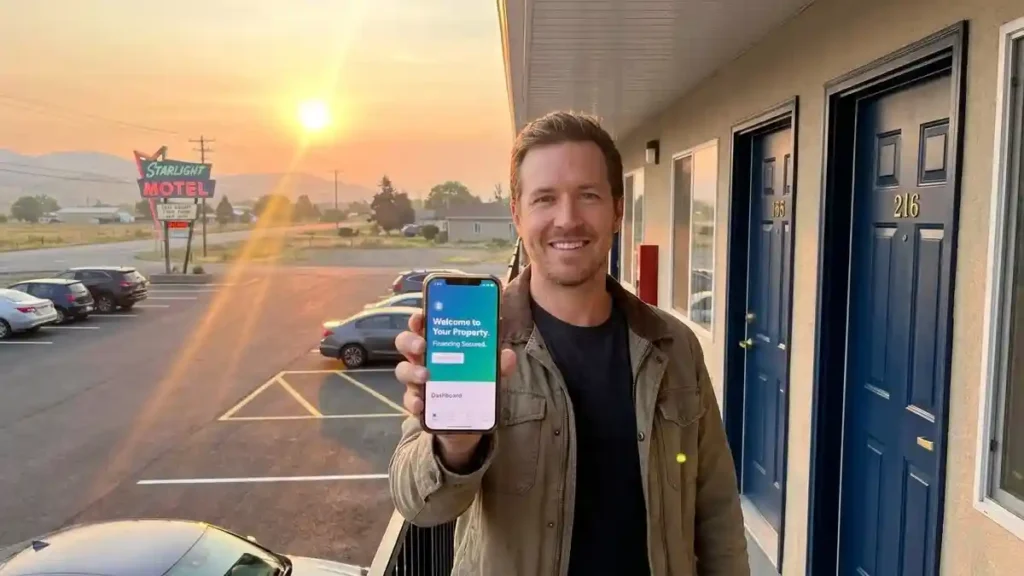
Buying your first motel is exciting but scary. Many banks see first-time buyers as high-risk. To beat this, you need experience. If you haven’t run a motel, you can hire a management company. Lenders feel better when they know a pro is at the helm.
First-time buyers should lean on SBA 7(a) loans. The lower down payment is a huge help. You also need to budget for “hidden costs.” These include legal fees and land transfer taxes. You should also keep three to six months of operating cash in the bank. A financial consultant can walk you through these steps so you don’t run out of money before your first guest arrives.
What are the requirements for motel financing approval?
Lenders use a checklist to judge your deal. They look at “The Five C’s”: character, capacity, capital, conditions, and collateral. Your credit history shows your character. The motel’s income shows your capacity to pay. Your down payment is your capital. The local market trends are the conditions. The building itself is the collateral.
You will need a lot of paperwork. This includes three years of tax returns and a personal financial statement. You also need an environmental report. Banks want to make sure the land isn’t contaminated. If you have all this ready, the approval can take 30 to 90 days.
Conventional bank financing for motels
Local and regional banks still play a big role. Conventional loans often have the lowest rates. However, they are harder to get. Banks usually only lend up to 60% or 65% of the property’s value. This means you need more of your own money upfront.
Banks love “flagged” motels. These are properties with well-known brands like Choice or Wyndham. Branded motels have a built-in guest base. Independent motels have to work harder. You must prove your guest retention is high. If your independent motel is in a great spot with high traffic, a local bank might take a chance on you.
Pros and cons of owner financing for motels
Owner financing is a creative way to close a deal. The seller acts as the bank. You make payments to them instead of a mortgage company.
Pros of Owner Financing:
- Speed: You can bypass the long bank process.
- Flexibility: You can negotiate the down payment and interest rate directly.
- Easier Access: This is great if your credit isn’t perfect.
Cons of Owner Financing:
- Higher Rates: Sellers often charge more because they are taking a risk.
- Balloon Payments: Many of these deals end with a big payment due in 3 to 5 years.
- Risk: If you miss a payment, the seller can quickly repossess the property.
Bridge loans for motel renovations
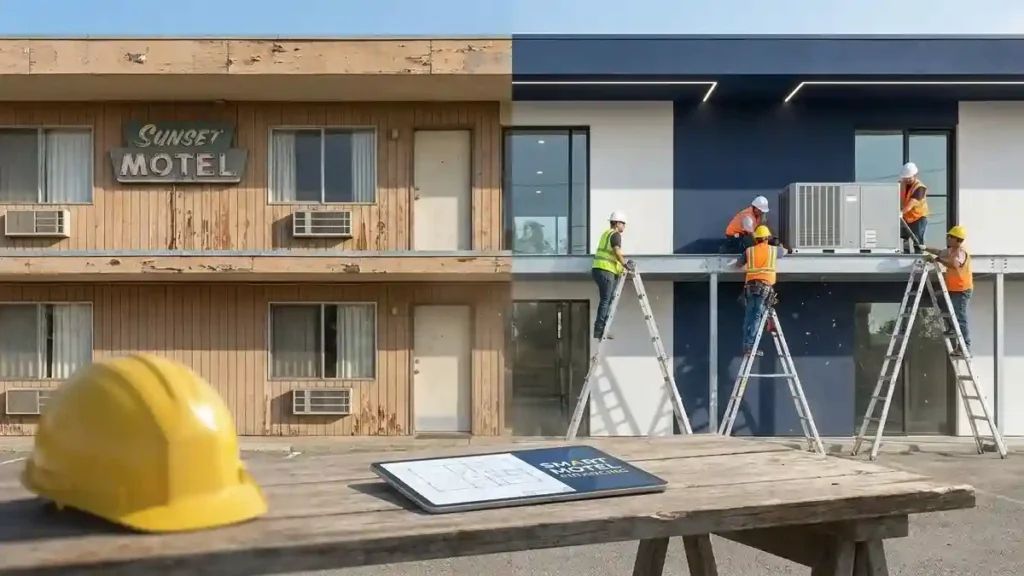
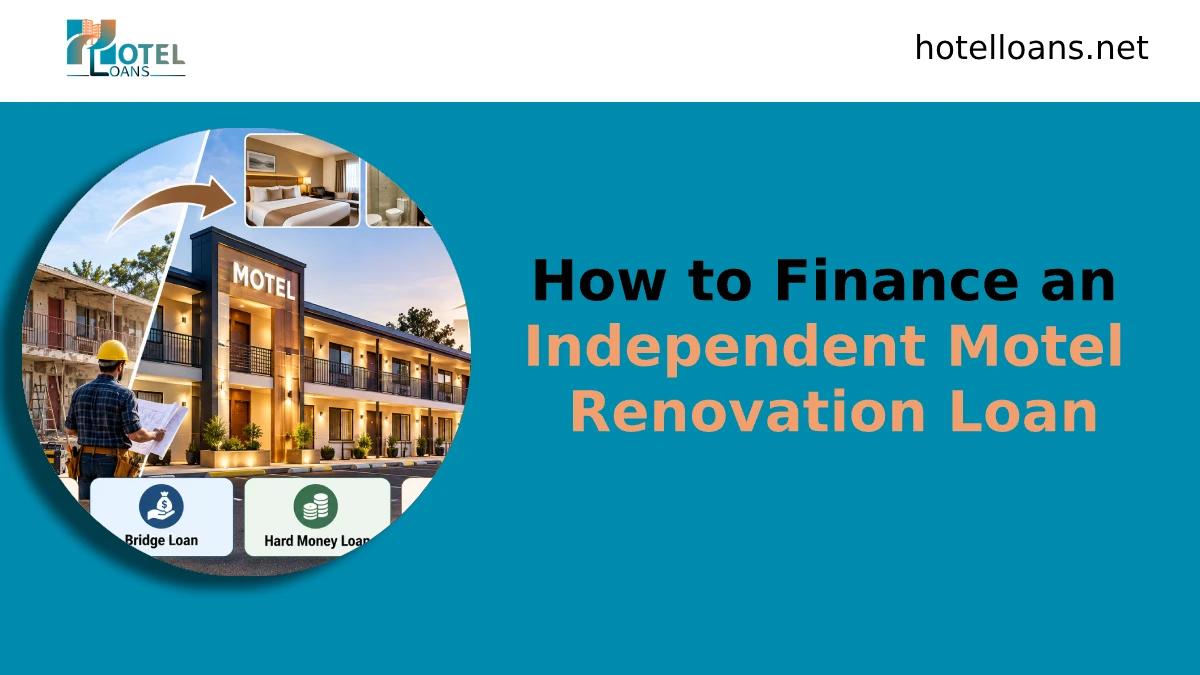
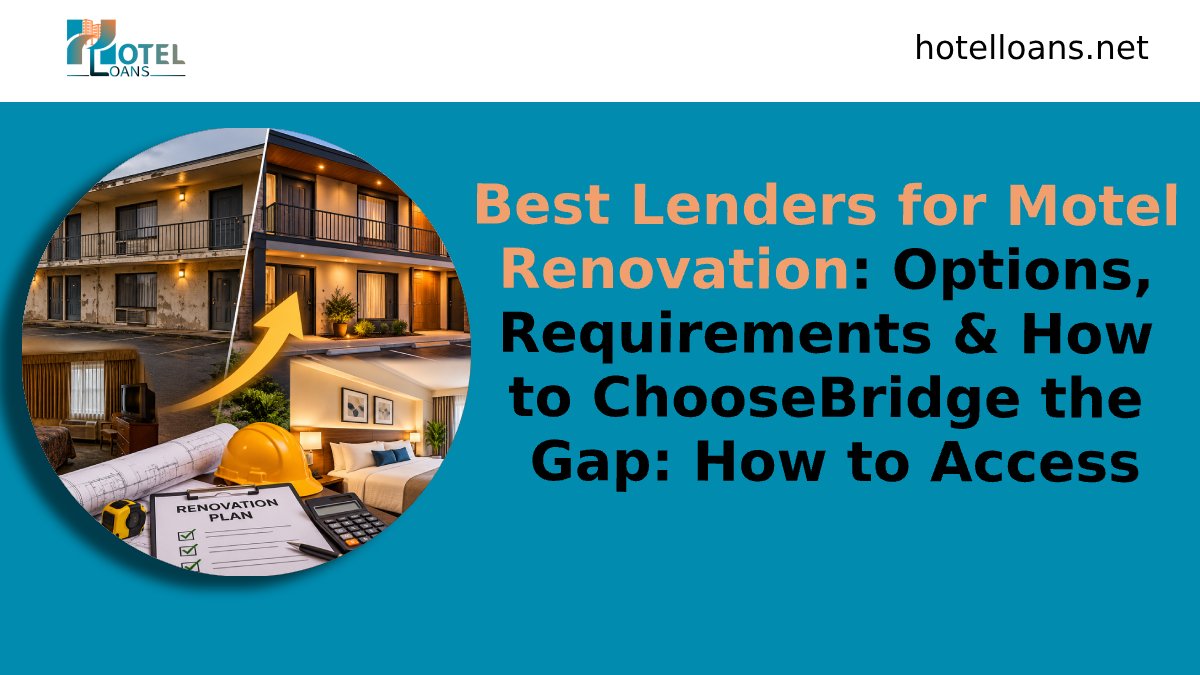
Motels need to look fresh to stay competitive. A Property Improvement Plan (PIP) can cost $3,500 to $35,000 per room. If you don’t have that cash, a bridge loan can help. These are short-term loans, usually 6 to 36 months.
Bridge loans “bridge the gap” until you can get a permanent loan. They are great for buying a rundown property and fixing it up. Once the work is done and guests are checking in, you can refinance into a lower-rate SBA or bank loan. These loans are expensive but fast. You can often get funds in just a few weeks.
How to finance a new build motel project
Building from scratch is the toughest path. Lenders worry about “construction risk.” They want to see fixed-price contracts from good builders. You will likely need to bring 20% to 35% equity to the table.
A common structure is a construction-to-permanent loan. You pay only interest while the building is being built. Once it’s finished and stable, the loan turns into a 25-year mortgage. Feasibility studies are a must here. You have to prove that the town actually needs a new motel.
Comparing motel financing rates
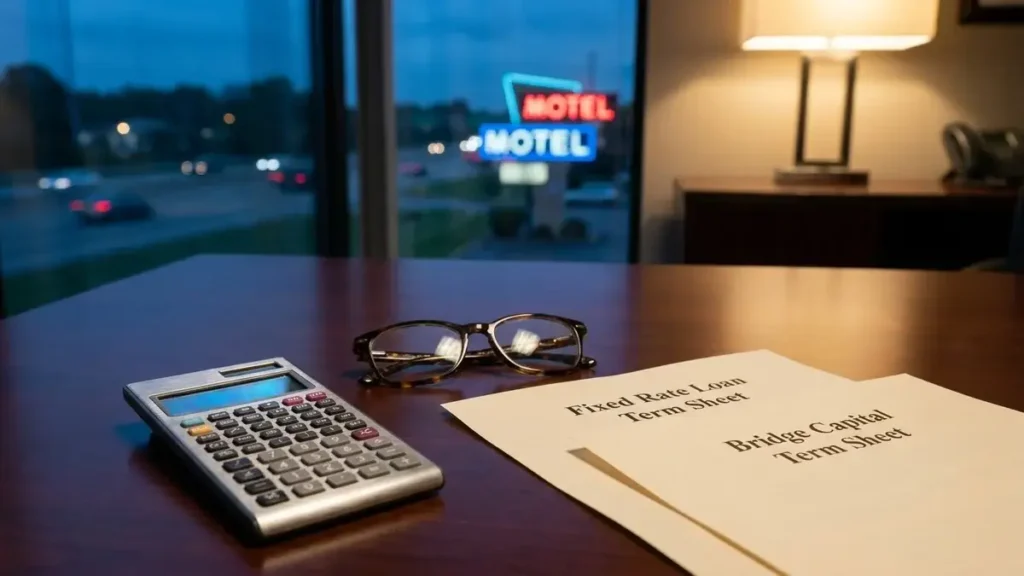
Rates are always moving. As of early 2026, the federal funds rate is around 3.75% to 4.00%. SBA 7(a) rates are often tied to the prime rate. Floating rates can range from 9.5% to 10.5%. Fixed rates can be lower, around 7.5% to 8.5%.
Don’t just look at the headline rate. Check the “banker’s year” rule. Some lenders use a 360-day year. Others use 365 days. This small gap can cost you thousands on a big loan. Also, look at the fees. SBA loans have guarantee fees that can reach 3.75% of the loan amount.
Hard money loans for motel investors
Hard money is for unique situations. These loans come from private investors, not banks. They focus on the property’s value, not your credit. Hard money is very fast. You can get cash in as little as 24 to 48 hours.
The cost is high. Rates can be 10% to 15%. You use hard money for “fix and flip” deals or when you need to close on a distressed sale immediately. It is a tool, not a long-term solution. You should always have a plan to pay it off quickly.
Can you get government grants for rural motel development?
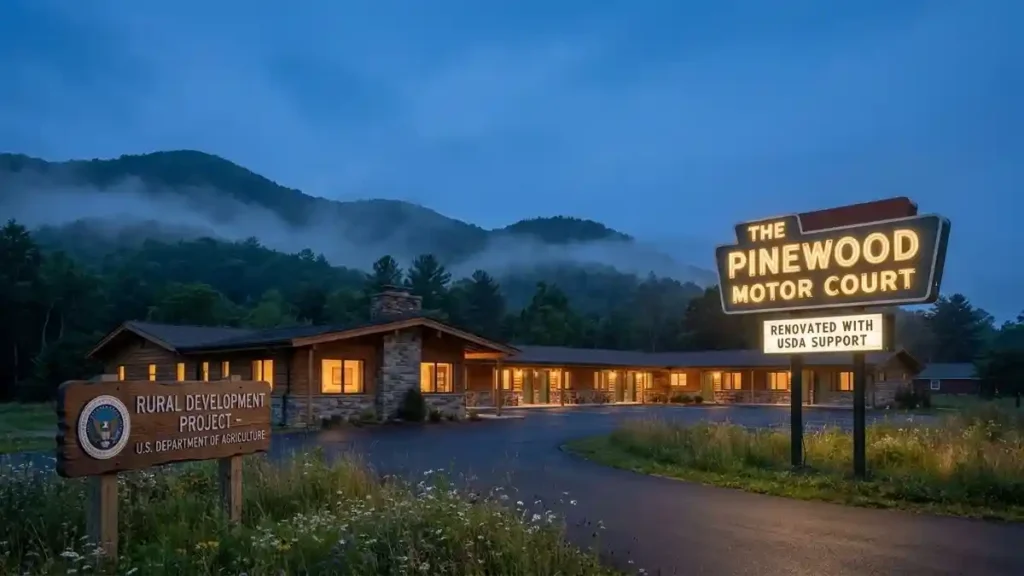
If your motel is in a small town, look at the USDA Business and Industry (B&I) program. Rural areas are towns with fewer than 50,000 people. The USDA guarantees up to 80% or 85% of these loans.
This program helps banks lend in areas they might otherwise avoid. It promotes job creation in rural America. While there aren’t many “free money” grants for private owners, the USDA REAP program offers grants for energy upgrades. This can pay for new solar panels or better HVAC systems. In 2024, the USDA obligated $1.8 billion through the B&I program. Hospitality was the number one sector for these funds.
Motel Industry Performance Data: By the Numbers
| Organization | Key Statistic | Year |
| World Travel & Tourism Council (WTTC) | Travel & Tourism GDP Impact: $11.7 Trillion | 2025 |
| Small Business Administration (SBA) | Total 7(a) & 504 Funding: $37.8 Billion | 2024 |
| Zippia | US Hotel/Motel Industry Value: $200 Billion | 2025 |
| PWC / Lighthouse | US Hotel Price Decline (August): -5.6% | 2025 |
| Harvard JCHS | Median Home Price (NAR): $412,500 | 2024 |
| Yale Admissions Data | Early Action Acceptance Rate: 10.1% | 2026 |
Conclusion
Securing the right motel financing is the most important step in your investment journey. The market is full of potential, with international arrivals expected to hit 1.55 billion this year. However, you must be smart. You need to understand your DSCR, manage your PIP costs, and pick the right loan from the 75 available options. Whether you use an SBA loan, a bridge loan, or owner financing, your success depends on preparation. HotelLoans.Net brings 30 years of experience to your corner. They help you navigate the complex world of hospitality real estate so you can focus on running your business. The “maturity wall” and rising costs are challenges, but for the prepared investor, they are also opportunities. Secure your dream property with a plan that works today and for the long haul.
FAQs
Can I live in my own motel?
Yes. Owners often live on-site to manage daily operations better. However, you must prove the property primarily functions as a for-profit business. Lenders, especially the SBA, require you to focus on hospitality income rather than residential use.
Do foreign nationals qualify for motel loans?
Yes. Foreign nationals can secure motel financing in the United States through specialized private lenders or certain bank programs. You typically need a valid visa, a passport, and a higher down payment, often between 25 and 40 percent of the purchase price.
Is a high credit score always required?
No. While many traditional banks prefer scores above 680, alternative options like hard money or DSCR loans focus more on property income. If the motel shows strong cash flow, you might secure funding with a lower personal score.
Can I use 401 (k) funds for down payments?
Yes. Using a process called Rollover as Business Startups, or ROBS, you can invest retirement funds into your motel business without taxes or penalties. This creates debt-free equity that helps you satisfy the down payment requirements of many hospitality lenders.
Are closed motels eligible for SBA financing?
Yes. You can use SBA 7(a) or 504 loans to purchase and reopen closed motels. However, you must provide a detailed turnaround plan and financial projections. Lenders will also scrutinize your management experience to ensure the property becomes profitable quickly.